St Stephen’s CE Primary School
Music
Music Curriculum Vision Statement
Intent
At St Stephen's C of E Primary School, we believe music is a powerful form of communication that inspires creativity, nurtures self-expression and celebrates the diversity of our world. Through our music curriculum, pupils develop confidence, musical knowledge and performance skills while gaining an appreciation of a wide range of musical traditions. We aim for every child to become a curious, expressive and reflective musician who enjoys creating, performing and listening to music, recognising music as a lifelong source of enjoyment, connection and cultural understanding.
We follow the Kapow Primary Music scheme, providing a carefully sequenced curriculum that meets the requirements of the National Curriculum and builds musical knowledge, skills and vocabulary progressively from EYFS to Year 6. Pupils develop as performers, composers, listeners and musicians through singing, composing, improvising, listening and performing. By revisiting and extending key musical concepts each year, children develop technical proficiency, creativity and confidence while learning to communicate ideas and emotions through music.
Implementation
Curriculum Progression
Our curriculum is carefully sequenced so that pupils build progressively on their musical knowledge and skills throughout their time at St Stephen's.
Learning is organised around five key strands that are revisited and developed each year:
• Listening and evaluating
• Creating sound
• Notation
• Improvising and composing
• Performing
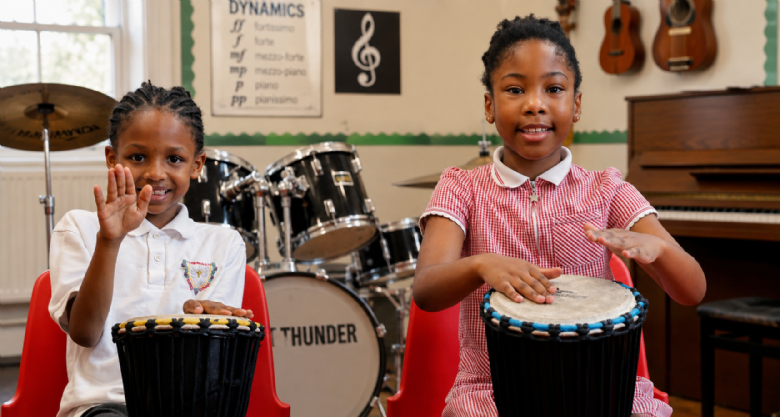
Children learn through practical, active music-making by listening, singing, playing instruments, composing, improvising and performing. Lessons encourage collaboration, creativity and reflection while developing technical skills alongside a deeper understanding of music. Pupils use increasingly sophisticated musical vocabulary to describe, analyse and evaluate their work.
Curriculum Coverage
Pupils revisit and deepen their understanding through a broad range of musical experiences, including:
• Pulse and rhythm
• Pitch and melody
• Musical theatre
• Composition
• Instrumental performance
• Songs from different cultures and traditions
• Western classical music
• Music technology
The curriculum introduces children to music from a wide variety of historical periods, cultures, composers and musical traditions, helping them understand music as a universal language. Each unit builds on previous learning, ensuring clear progression in both musical knowledge and practical skills.
Key Concepts
Learning is centred on developing pupils as confident musicians through:
• Listening and appraising
• Singing and performing
• Composing and improvising
• Understanding notation
• Developing musical vocabulary
Children learn to perform with increasing confidence, compose creatively, listen critically and respond thoughtfully to a wide range of musical styles.
Cross-Curricular Links
Music enriches learning across the wider curriculum through meaningful links with English, mathematics, history, geography, computing and PSHE. Pupils develop communication skills through singing and performance, mathematical understanding through rhythm and pattern, cultural awareness through music from different times and places, and digital skills through music technology. Music also supports pupils' personal development by fostering confidence, resilience, teamwork and self-expression.
Impact
By the end of Year 6, pupils leave St Stephen's as confident, creative and reflective musicians who enjoy performing, composing, improvising and listening with understanding. They have developed the knowledge, skills and musical vocabulary needed to appreciate diverse musical traditions and continue their musical journey beyond primary school.
Our pupils will:
• Perform confidently using their voices and a range of instruments
• Compose and improvise using increasingly sophisticated musical techniques
• Listen to and evaluate music from a wide range of genres, cultures and historical periods
• Use musical vocabulary accurately to describe and discuss music
• Demonstrate creativity, resilience and collaboration through shared musical experiences
• Develop a lifelong appreciation of music as a means of expression, enjoyment and cultural understanding
Assessment is ongoing through teacher observation, practical performances, compositions, pupil discussion and reflective evaluation. Clear progression from Reception to Year 6 ensures every child develops secure musical knowledge, practical skills and confidence before moving on to increasingly ambitious musical experiences.